Available technologies, a comparison between digital and flexographic printing, costs and how to choose the right solution for your corrugated packaging production.
Printing on corrugated board requires different technologies from those used for paper: the thickness, roughness and flexibility of the material demand specific solutions. This guide compares flexography, single-pass digital printing and screen printing to help you choose the right technology for your volume and artwork.
Printing Technologies for Corrugated Cardboard
Flexography
Flexography is the traditional method for printing on corrugated cardboard. It uses flexible photopolymer plates mounted on rotating cylinders. It is efficient for large runs with repetitive graphics, but has significant limitations for small batches: high plate costs, long make-ready times and difficulty reproducing halftones and gradients.
Single-Pass Digital Inkjet

A bar of inkjet printheads covers the full width of the sheet, printing in a single pass at high speed. No plates, instant setup, photographic quality. Systems such as the EDM-650X achieve resolutions of 600×600 dpi at speeds of up to 50 m/min.
Multi-Pass Digital Printing
Multi-pass flatbed printers offer excellent quality but limited speeds. The printhead moves back and forth over the stationary sheet, ensuring high resolution. Suitable for prototypes, samples and very short runs.
Screen Printing
Used for specific applications such as special colours, opaque solid backgrounds and tactile effects. Not suitable for photographic images, but excels in applications requiring a high ink thickness.
Direct Printing vs Pre-Print
Two fundamentally different approaches:
- — printing directly onto the already formed corrugated sheet. This is the most flexible method and the one used by the EDM-650X
- — printing on a smooth liner that is then laminated to the flute. Offers superior quality but requires a more complex process and higher volumes
Challenges of Printing on Corrugated Cardboard
Printing on corrugated cardboard presents unique challenges compared to smooth paper:
- — the underlying flute creates a non-uniform surface
- — cardboard is porous and absorbs quickly
- — the "washboard" effect visible in solid background areas
- — cardboards from 1.5 to 10 mm require adjustments
- — cardboard generates particulate that can clog printheads
Practical Tips for Optimal Results
- Use cardboards with quality liner (white kraft or coated) for direct printing
- Avoid 100% dark solid backgrounds — prefer screened tints or patterns
- Allow for tolerance margins in artwork to compensate for deformations
- Choose inks formulated specifically for corrugated cardboard
- Maintain controlled temperature and humidity in the printing environment
- Always run print tests before production
When to Choose Digital
Digital printing on corrugated cardboard is the optimal choice when:
- Runs are below 1,000–2,000 pieces
- Graphics change frequently
- Variable data is needed (QR codes, numbering, personalisation)
- Time-to-market is critical
- Prototypes or customer samples are being produced
Conclusion
Printing on corrugated cardboard is in full evolution. Single-pass digital technology has opened up possibilities unimaginable just a few years ago, making quality printing accessible even for small runs. The key is to choose the right technology for your volume and type of production.
Related products
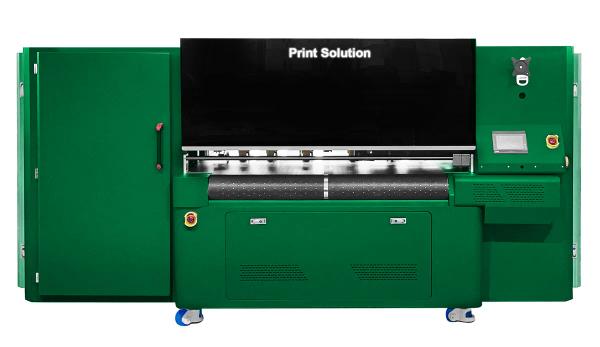
For single-pass digital printing on corrugated board, discover the EDM 650X: 650mm width, up to 100m/min, water-based inks.
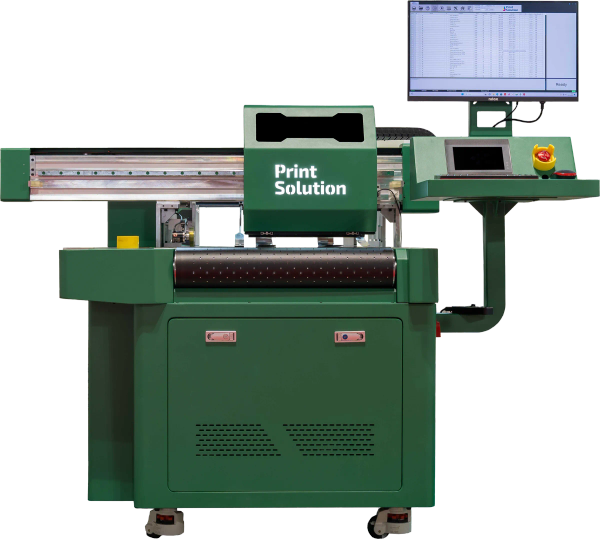
For compact high-impact solutions, discover the GreenBox Evo.