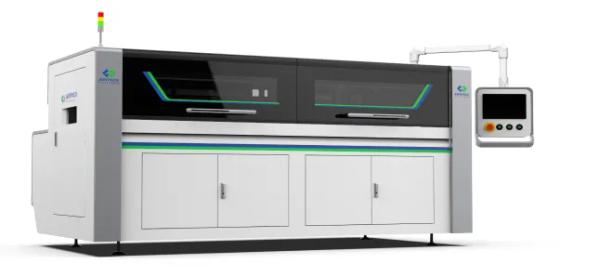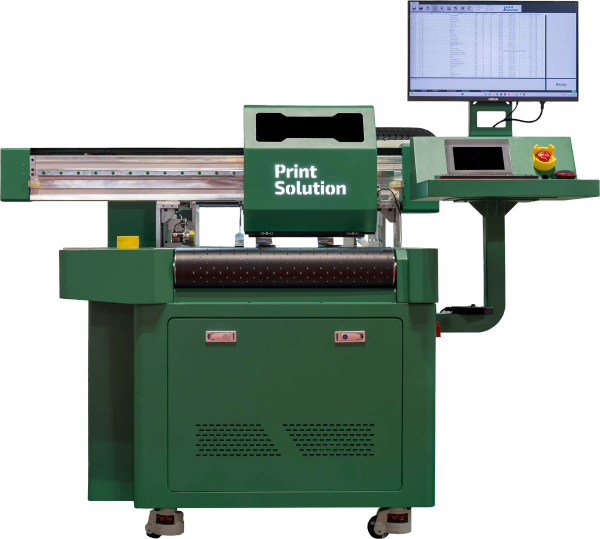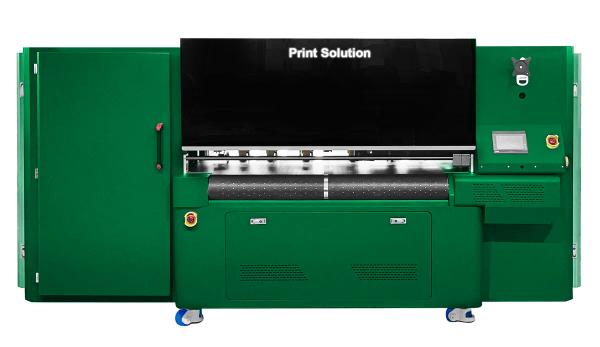
The true cost of e-commerce packaging is rarely on the supplier invoice. Discover the hidden costs — volumetric weight, stock, minimum orders — and how to calculate the real cost per shipment.
For an e-commerce business, packaging is often the second largest operational cost after the product itself. Yet most companies manage it passively: two or three standard formats are chosen, 1,000 units are ordered at a time, and whatever is available gets used. The result? Far higher costs than necessary — not on the supplier invoice, but in the total cost of every shipment.
The true cost of a shipment: not what you think
Take a concrete example. An e-commerce company sells products of varying dimensions and uses a standard 40×30×20 cm box for everything, purchased at €0.42 per unit. Now calculate the volumetric weight using the standard carrier formula (L×W×H/5,000):
40 × 30 × 20 / 5,000 = 4.8 volumetric kg. If the product weighs 1.5 kg actual, the carrier bills 4.8 kg — more than three times the real weight. If a custom box of 32×22×18 cm were used instead, the volumetric weight would drop to 2.5 kg. Over 100 shipments a day with a carrier charging €0.30 per extra kg, the daily saving is around €69. Annual: over €25,000.
The "economical" €0.42 box was costing tens of thousands of euros in unnecessary volumetric weight.
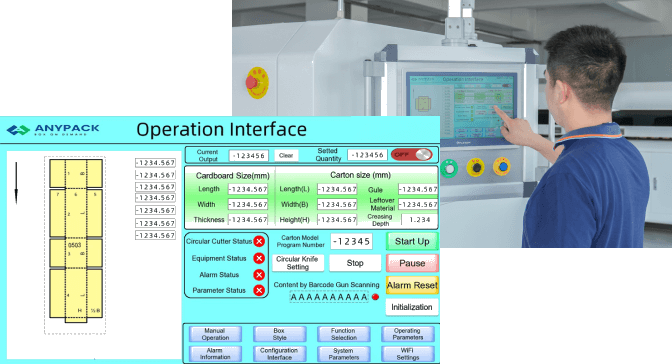
Featured product
Anypack AB2500
Automatic machine for on-demand custom corrugated cardboard boxes
The three e-commerce packaging costs that never appear on invoices
Beyond volumetric weight, there are two further hidden costs that erode the margin:
The first is void fill material. An oversized box requires bubble wrap, kraft paper, or polystyrene chips to protect the product. These materials cost money — and add weight. Every gram of void fill increases the volumetric weight, creating a double cost: the material itself plus the extra shipping charge.
The second is minimum-order cost. Anyone buying boxes from an external supplier typically orders in batches of 500 or 1,000 units per format. Stock-holding cost runs between 20% and 30% of inventory value per year.
In-house box maker vs custom purchase: when does each make sense?
There are currently three approaches to on-demand packaging for e-commerce, each with different break-even thresholds:
The first approach is buying custom printed boxes from a supplier, with logo or brand printing. Costs range from €0.75 to €2.50 per unit for printed boxes, with minimum orders often from 200 to 500 units per format. Suitable for companies with a single format and low-to-medium volumes (up to 500–1,000 shipments per month).
The second approach is an external box-on-demand service: some suppliers produce custom-size boxes for each order, charging above-average per-unit costs (€0.80–1.50) but with no minimum. Suitable for testing the model without upfront investment.
The third approach is in-house production with a box maker like the Anypack AB2500. The initial investment is significant (€65,000–75,000), but the cost per box drops dramatically at certain volumes, and supplier dependence, minimum orders, stock and lead times are entirely eliminated. Suitable for companies exceeding 3,000 shipments per month with variable formats.Anypack AB2500
The break-even calculation for different volumes
Assuming a total saving (box + shipping + stock) of €0.35 per shipment by switching to a box maker, break-even is reached in:
3,000 shipments/month → monthly saving €1,050 → break-even in approx. 62 months. 8,000 shipments/month → monthly saving €2,800 → break-even in approx. 23 months. 15,000 shipments/month → monthly saving €5,250 → break-even in approx. 12 months.
These figures are conservative: they do not include savings on staff time spent managing packaging orders, nor the value of operational flexibility.
The right question to ask
It is not "how much does a box cost?" but "how much does every shipment cost me, all-in?" Board, void fill, volumetric weight, stock, minimum orders, management time. Only by adding all these items do you get the real number.
If you want to understand which solution best fits your volume and formats, contact us for a free analysis of your current packaging setup.
Related products
To eliminate box stock and produce on-demand, discover the Anypack AB2500. For corrugated board printing with no setup costs, discover the