What is hot foil stamping, how it works and when it's the right choice for premium packaging. Digital vs traditional hot foil: key differences explained.
Hot foil stamping is the technique that transfers metallic films — gold, silver, holographic — onto packaging and labels using heat and pressure, creating premium effects that cannot be replicated with ink printing. With digital systems, it is now available even for short runs and personalised items.
How It Works
The process is elegant in its simplicity. A heated plate (die) presses the metallic foil against the substrate. The heat activates the adhesive on the back of the foil, which transfers only in the raised areas of the die. The result is a perfectly defined metallic image.
The main steps are:
- Preparation of the die with the design to be stamped

Featured product
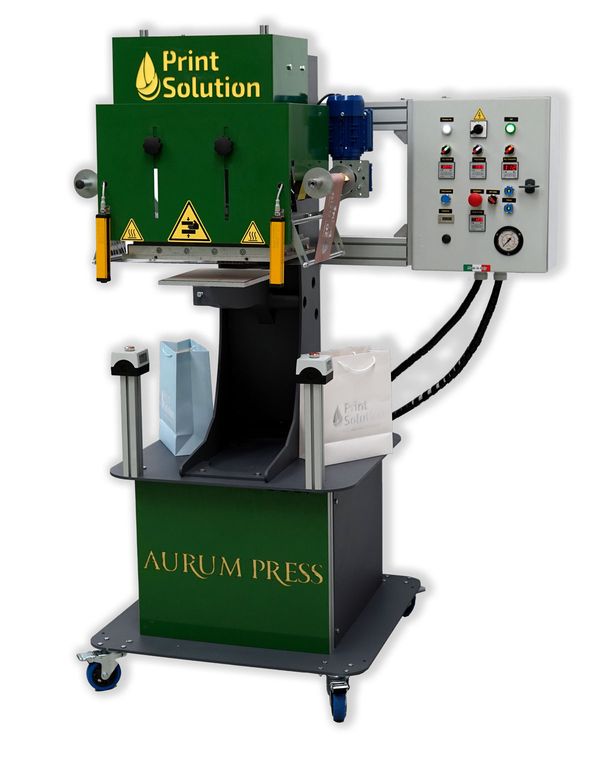
AurumPress
Hot foil stamping machine for premium packaging and metallic finishes
- Heating the die to the optimal temperature (100–150°C)
- Positioning the foil between the die and substrate
- Pressure: the die transfers the foil onto the substrate
- Removal: the excess foil peels away, leaving only the image
Available Foil Types
- Gold— the ultimate classic, available in various shades (yellow, rose, champagne)
- Silver— elegant and modern, ideal for minimalist designs
- Copper and bronze— a growing trend, perfect for artisanal products
- Holographic— rainbow and diffractive effects for maximum visual impact
- Solid colours— matte or glossy coloured foils for creative effects
- Clear gloss— for spot UV-like effects without UV
Main Applications
Premium Labels
Wines, spirits, cosmetics and gourmet products use hot foil to stand out on the shelf. A gold logo on a matte black label immediately communicates exclusivity.
Luxury Packaging
Boxes for jewellery, perfumes, chocolates and premium products. Hot foil adds a tactile and visual dimension that printing alone cannot offer.
Security and Anti-Counterfeiting
Holographic foils are used as security features on documents, certificates and branded products to prevent counterfeiting.
Business Cards and Invitations
To communicate professionalism and attention to detail, hot foil on business cards and invitations is a high-impact choice.
Digital vs Traditional Hot Foil
The traditional method requires custom metal dies, with costs that are only amortised on large runs. Digital technology has revolutionised the sector: systems like theAurumPressuse toner as an adhesive base, eliminating the need for physical dies.
This means you can apply hot foil even on runs of just a few pieces, with instant design changes and variable data. The workflow is simple: print the design with toner, pass the sheet through the AurumPress and the foil adheres only where there is toner.
When to Use Hot Foil
- The product is positioned in the mid-to-high or premium range
- A visual differentiator on the shelf is needed
- The brand wants to communicate quality and attention to detail
- Metallic elements not reproducible with CMYK printing are required
- Anti-counterfeiting security elements are desired
Conclusion
Hot foil stamping is a finish that transforms an ordinary product into an extraordinary one. With digital technologies like AurumPress, it is no longer reserved for large runs: even small productions can benefit from high-quality metallic finishes without prohibitive costs.
Related products
For digital hot foil stamping on packaging and labels without dies, discover AurumPress: digital hot foil with gold, silver and holographic effects from zero run length.