What a compliant food label must contain (ingredients, allergens, nutrition table, batch and expiry) and why it pays to print them in-house, even in short runs.
Food labels aren't just a marketing element: first and foremost they're a compliance tool. Ingredients, allergens, nutrition values, batch and expiry must follow precise, up-to-date rules — and every recipe or format change means a new label. In this guide we look at what a compliant food label must contain and why more and more companies choose to print them in-house, even in short runs.
What a food label must contain
In Europe, information on pre-packaged food products is governed by EU Regulation 1169/2011. In short, a food label must show, clearly and legibly:
- the product name;
- the list of ingredients, with allergens highlighted;
- the nutrition values (the so-called nutrition table);
- net quantity, best-before or use-by date, and the batch;
- the name and address of the producer or packer, plus any storage and origin information.
These requirements change over time and must be adapted to each product: a new recipe, a different allergen or a format change is enough to make the previous label obsolete.
The problem of relying only on an external supplier
Those who order labels only externally always run into the same limits: high minimum orders, long lead times and stock that risks becoming unusable as soon as a piece of wording changes. For a food & beverage producer with many product lines, seasonal editions or frequent restyling, this means tied-up inventory and low responsiveness.
The advantages of printing food labels in-house
Bringing label printing in-house changes the rules of the game:
Same-day updates. If an allergen or a nutrition value changes, you immediately reprint the corrected version, without waiting for the supplier.
Cost-effective short runs. Digital printing has no setup costs: you can produce a few dozen pieces for a new product or a limited edition with no waste.
Batch and expiry as variable data. Batch numbers and dates can be printed directly in line, different on every piece, in a single pass together with the artwork.
Less obsolete stock, more control. You produce what you need when you need it, and manage variants independently.
Which printing technologies
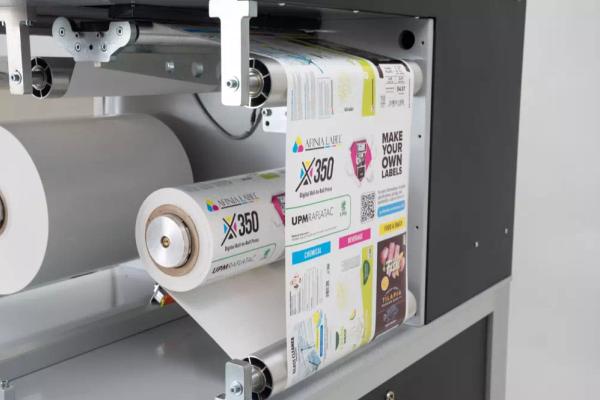
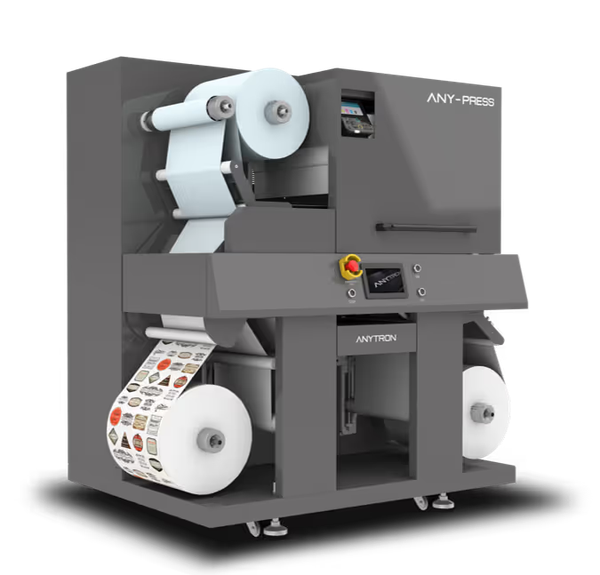
For colour labels, the most common technologies are water-based Memjet inkjet — like the Afinia X350, bright and fast, suited to volume — pigment inkjet and toner — like the Any-Press, which produces more durable labels: colour rendering, resistance and cost per label all differ. The choice depends on the type of product, the environment the label will end up in (fridge, humidity, contact) and the volumes. The safest way to choose is to test the technologies on your own real materials.
Conclusion
Managing food labels in-house means keeping up with regulations without depending on a supplier's lead times and minimums: you update wording the same day, produce short runs and print batch and expiry as variable data.
If you'd like to evaluate the right solution for your products, contact us for a free consultation or come and print your labels live at our Demo Center in Sesto San Giovanni (Milan) — 📞 02 4943 9417. How to print labels in-house.