|
Blog
A complete guide to materials and finishes for self-adhesive labels: paper, polypropylene, polyester, lamination, varnishes and special effects for any application.
The choice of self-adhesive label material determines the durability, appearance and cost of the finished product. Coated paper for indoor use, BOPP polypropylene for humid and food environments, PET polyester for extreme temperatures: every application has its optimal substrate.
The most common and affordable material. Available in glossy or matte finish, it is ideal for dry product labels: packaged food, boxes, shelf products. It is not water-resistant, making it unsuitable for refrigerated products or those in contact with liquids.
Plastic film resistant to water, oils and tearing. It is the go-to material for bottle labels, cosmetics, detergents and food products that require moisture resistance. Available in white, clear (no-label look) and metallic versions.
The most durable of synthetic materials. It withstands chemical solvents, extreme temperatures, abrasion and UV rays. Used for industrial labels, chemical products, outdoor and automotive applications. More expensive but virtually indestructible.
Uncoated paper with natural texture. It conveys craftsmanship, authenticity and sustainability. Perfect for organic products, natural wines, craft beers and natural cosmetics. Absorbent and not water-resistant, it requires a surface coating if exposed to liquids.
A glossy protective film applied over the printed label. It enhances colour vibrancy, protects against abrasion and moisture. It gives a premium, professional appearance.
Protective film with a satin finish. It reduces reflections, adds elegance and a velvety touch. Widely used for luxury products, cosmetics and wines.
Ultraviolet-cured varnish that creates a hard, brilliant protective layer. It can be applied as a flood coat or selectively (spot UV) to create tactile and visual contrasts.
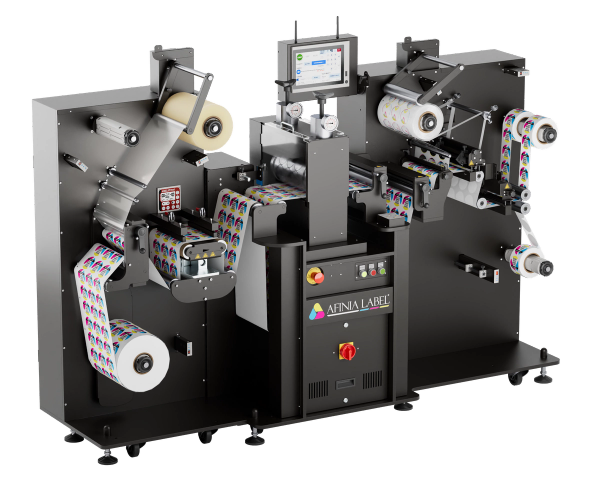
Application of metallic foils (gold, silver, colours) through pressure and heat. It creates high-impact metallic effects. Systems like the AurumPress allow hot foil application even on small batches, without plates.
To choose the right material, consider these factors:
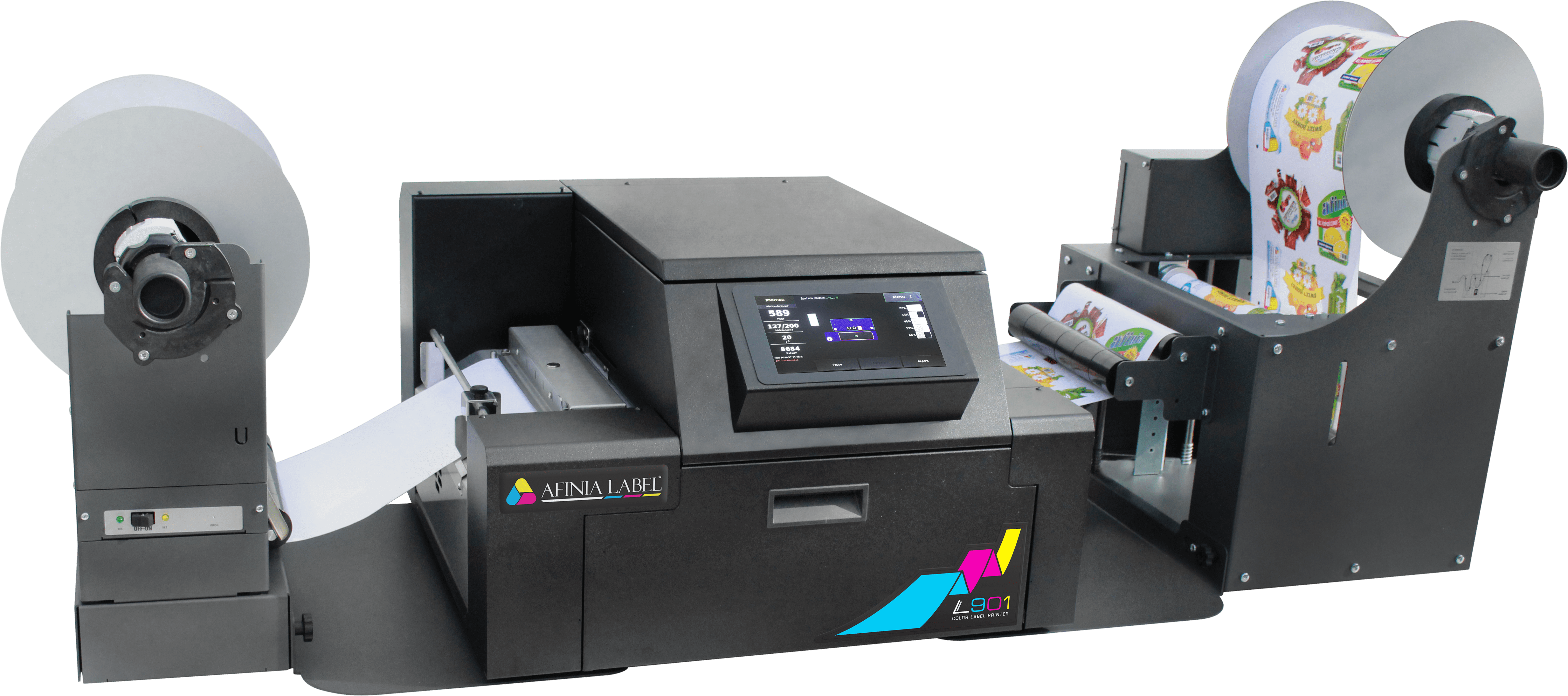
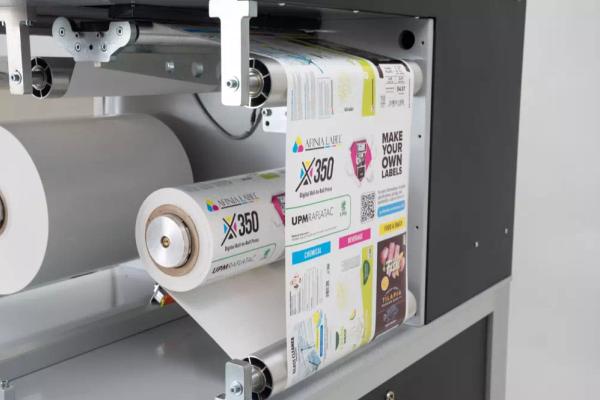
It is essential to verify compatibility between material and printer. Afinia printers, for example, handle a wide range of media: from coated paper to polypropylene, from polyester to uncoated paper. The Afinia L901 with pigment inks is particularly versatile and ensures optimal adhesion even on synthetic media.
Print Solution provides compatible material samples for every printer model, allowing real-world testing before purchase.
The label material and finish determine the appearance, durability and functionality of your labelled product. There is no universal material: the choice depends on the specific application. Investing time in selecting the correct material avoids costly problems during production and commercialisation.
To print professional-quality colour self-adhesive labels in-house, discover the Afinia L901: Memjet inkjet with white ink and inline lamination.
Print Solution products related to this article's topic